
UK Unemployment Rate
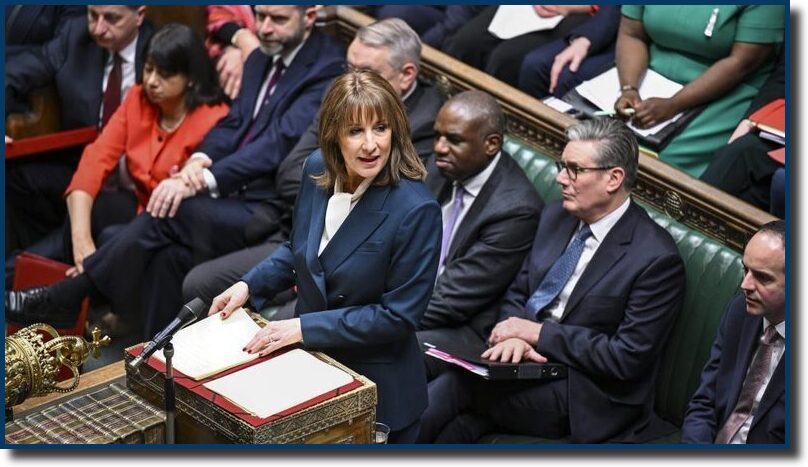
Rachel Reeves’ November 2025 Budget
After the Chancellor of the Exchequer Racheal Reeves, budget, London now has the highest unemployment rate in the UK – almost doubling in under two years in the worst slump since lockdown. Rachel Reeves’ November 2025 budget introduced significant tax increases—particularly on employer costs and high earners—aimed at strengthening public finances, with major changes taking effect from 2026.
Key impacts included increased income tax for many through frozen thresholds, increased employer costs, higher wages, and targeted benefits changes. The UK unemployment rate was 5.1%, and 1.84 million people aged 16+ were unemployed. Unemployment levels increased by around 280,000 over the last year, and the unemployment rate has increased from 4.4%
UK Unemployment Rate
Rachel Reeves delivered the budget on 30 October 2025, the first from a Labour chancellor in a decade and a half. Chancellor Rachel Reeves’ budget aimed to bolster public services and stabilise finances, impacting households and businesses through tax changes and investment.
Key consequences included increased national insurance for employers, frozen income tax thresholds until 2028, and a higher minimum wage, with top earners facing higher tax burdens while low-income households may benefit.
Many Wealthy People Leaving The UK
Sixty of the wealthiest people in the UK collectively contribute more than £3bn a year in income tax. Approximately 9,500 to 16,500 high-net-worth individuals are projected to leave or have left the UK between 2024 and 2025, driven by tax increases, specifically the abolition of the non-dom status. While this is a significant, record-breaking outflow, it represents less than 1% of the total UK millionaire population.
Mass Movement Of Millionaires
Top destinations for these individuals include the UAE, Italy, and Switzerland This year alone, 142,000 millionaires are expected to relocate across borders — the highest number ever recorded — with projections climbing to 165,000 by 2026. Far from a statistical curiosity, this mass movement of millionaires represents the largest voluntary transfer of private capital in modern history.
Closure Of Private Schools
Over 100 private schools in England and Wales have closed or announced closures since Labour introduced a 20% VAT on fees in January 2025, with estimates from the Independent Schools Council (ISC) suggesting around 105 closures, affecting thousands of students, though government data shows fewer official closures, citing other reasons like poor management, while the ISC links closures to the new tax policy’s financial pressure.
9.6% Year-On-Year Decrease In Vacancies
The market is showing signs of cooling with a 9.6% year-on-year decrease in vacancies, which are now below pre-pandemic levels. The UK unemployment level as of January 2026 is approximately 1.84 million people, representing a 5.1% unemployment rate. Data indicates that unemployment has increased significantly, marking a four-year high, with around 280,000 more people unemployed compared to the previous year.
As of early 2026 UK job vacancies are approximately 729,000 based on the Office for National Statistics data from the September to November 2025 period. New analysis by a think tank suggests that more than 700,000 university graduates are out of work and claiming welfare benefits.
The Centre for Social Justice (CSJ) reports that 400,000 graduates were not in work and claiming Universal Credit, according to the latest statistics. There were 240,000 graduates who said they could not work due to health reasons, the think tank said, with that figure having more than doubled since 2019.
Key Trends in 2026
Vacancy Levels:
The number of vacancies has remained relatively flat, hovering around 729,000, representing a continued decline from the 2022 peak.
Sector Performance:
Despite overall declines, sectors with strong demand include childcare, logistics, and engineering.
Labour Market Tightness:
The unemployment-to-vacancy ratio has increased, indicating a rise in unemployment and more candidates available per job.
Employer Outlook:
The job market is expected to remain subdued due to rising employment costs, including national living wage increases, and economic uncertainty, limiting a major rebound in hiring. While the overall number of vacancies is falling, specific sectors such as engineering and IT continue to experience skill shortages, with some areas still showing high demand.
Key Labour Market Statistics 2026
- Unemployment Rate: 5.1% (aged 16+).
- Unemployment Level: 1.84 million, with some reports citing 1.8 million.
- Jobless Trends: Unemployment has risen, with forecasts suggesting it could reach an 11-year high in 2026, according to Aberdeen & Grampian Chamber of Commerce.
- Regional Variation: London has the highest unemployment level of any UK region at 7.2%.
- Vacancies: Job vacancies have fallen to 734,000, which is below pre-pandemic levels, reports FE News.
The rise in unemployment is linked to economic uncertainty, with employers becoming more reluctant to retain or hire staff. Based on data reported up to January 2026, over 500 pubs in England and Wales have closed, since the Labour government took office in July 2024, with reports indicating that over 1,100 pubs and restaurants closed following the October 2024 Budget.
Regarding schools, at least 50 private schools were reported to have closed or announced plans to close following the announcement of VAT on school fees, with some reports citing over 100 closures as of early 2026.
Breakdown Of Pub Closures
- Total Closures: More than 500 pubs have closed since Labour took office in July 2024.
- Post-Budget Impact: Reports indicate that 1,100 pubs and restaurants have closed in the wake of the Autumn Budget.
- Closing Rate: Pub closures have increased from roughly 6 per week in 2024 to 8 per week in early 2025.
- Contributing Factors: The closures are attributed to a “perfect storm” of high operating costs, including increased National Insurance for employers, minimum wage increases, and a reduction in business rates relief from 75% to 40%.
- Industry Warning: UK Hospitality has warned that a further 540 pubs face closure in 2026 without additional government support.
Private School Closures
As of August 2025, more than 50 independent schools had closed or announced plans to shut, with some sources reporting over 100 schools closed by January 2026, citing the VAT policy and rising costs.
- Causes: The closures are primarily attributed to the 20% VAT on private school fees introduced on January 1, 2025, alongside rises in National Insurance and minimum wage.
- Impact: The closures have caused significant disruption, with reports indicating they affect thousands of children, particularly at schools with lower fees
- Note: The government maintains that about 50 private school closures per year is typical, arguing that some of these closures are part of long-term trends.
Britain’s Farming Sector
Britain’s farming sector has been hit by an unprecedented wave of closures, with 6,270 agriculture, forestry and fishing businesses shutting down, since Rachel Reeves unveiled her inheritance tax changes on agricultural assets.
A record number of farms have closed in the 12 months leading up to January 2026, driven by declining investment and, according to claims made in the UK Parliament Hansard, the impact of Labour government decisions. While specific, total farm closure numbers are not detailed in that report, it highlights a trend of disappearing agricultural suppliers and sustained pressure on livelihoods.
- Farm Closures: The 12 months preceding January 2026 saw a record number of farm closures.
- Context: Concerns are centered on the failure to launch a new, sustainable farming incentive scheme, contributing to this trend.
- Industry Scale: The UK agricultural industry consists of 209,000 holdings.
Please note that the information from the UK Parliament focuses on the 12-month period leading up to early 2026, which aligns with the period following the Labour party taking power in the UK.